
Veo 3 Alternatives: Best Options in 2026
Comprehensive comparison of the best Veo 3 alternatives in 2026: Runway, Kling, Pika, Sora, and Seedance. Honest pros/cons, pricing, and use case recommendations.
Emma Chen · 20 min read · Apr 2, 2026
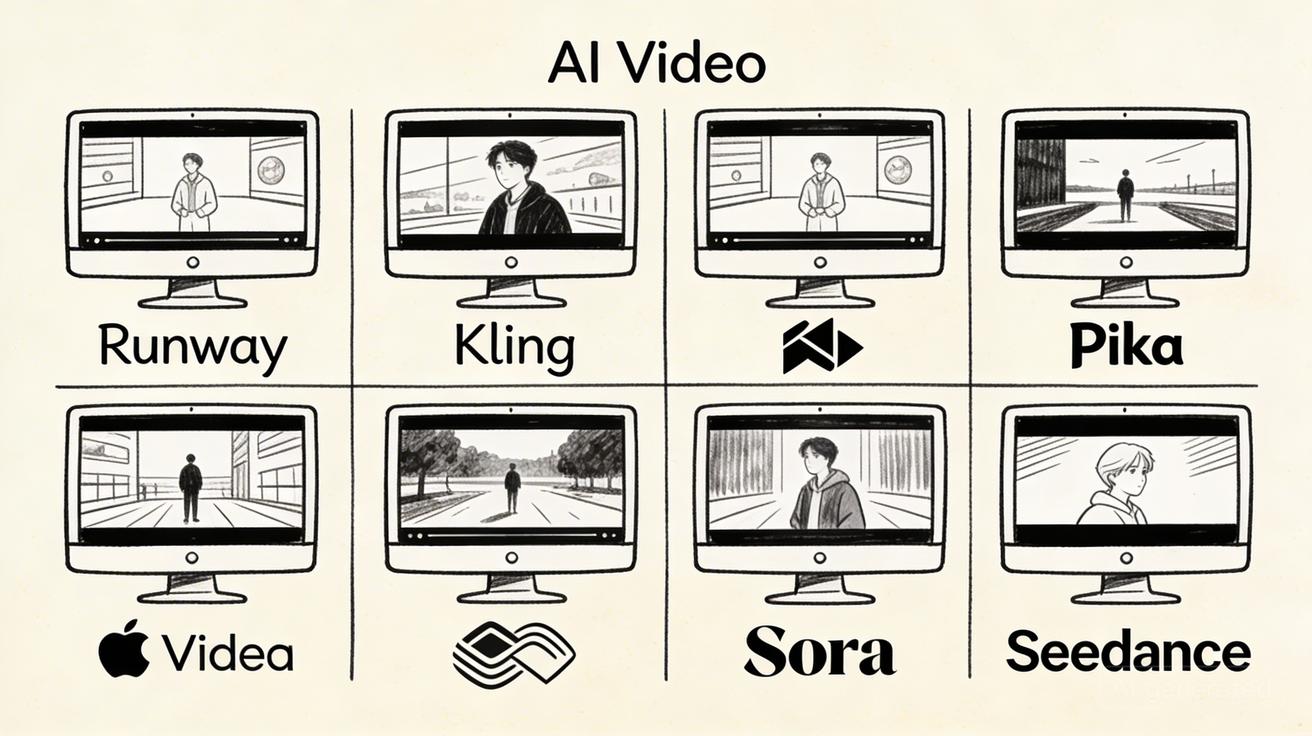
Google's Veo 3 has established itself as the benchmark for AI video generation quality in 2026, setting new standards for photorealism, physics simulation, and prompt adherence. But Veo 3 isn't the right tool for every creator, every use case, or every budget. Access limitations, pricing structure, generation speed, and specific capability gaps mean that the best AI video workflow for many creators involves one or more Veo 3 alternatives. This comprehensive guide evaluates the top alternatives to Google Veo 3 — Runway, Kling, Pika, Sora, and Seedance — with honest assessments of each platform's strengths, weaknesses, pricing, and ideal use cases. Whether you're looking for a more affordable option, a tool with specific capabilities Veo 3 lacks, or a complete replacement due to access constraints, this guide will help you
Quick Answer: The best options for veo 3 alternatives: options in 2026 in 2025 combine ease of use, output quality, and pricing flexibility. Our top picks are highlighted below with hands-on testing insights.
find the right fit for your specific needs.
Veo 3 vs. Alternatives: Quick Comparison
| Tool | Photorealism | Creative Control | Speed | Free Tier | Best For |
|---|---|---|---|---|---|
| Veo 3 | ⭐⭐⭐⭐⭐ | ⭐⭐⭐⭐ | Medium | Limited | Benchmark quality, research |
| Runway Gen-4 | ⭐⭐⭐⭐ | ⭐⭐⭐⭐⭐ | Fast | 125 lifetime credits | Professional video production |
| Kling 2.0 | ⭐⭐⭐⭐⭐ | ⭐⭐⭐⭐ | Medium | Limited daily | Motion quality, commercial use |
| Pika 2.2 | ⭐⭐⭐⭐ | ⭐⭐⭐⭐ | Very fast | Daily credits | Quick social content |
| Sora (OpenAI) | ⭐⭐⭐⭐⭐ | ⭐⭐⭐ | Slow | No | High-fidelity cinematic content |
| Seedance | ⭐⭐⭐⭐⭐ | ⭐⭐⭐⭐⭐ | Fast | Yes (no watermark) | All-around, marketing, creators |
Why Look for Veo 3 Alternatives?
Veo 3 is genuinely exceptional — its output quality, especially for photorealistic content, is among the best available from any AI video model in 2026. If quality is your only metric and access is not a constraint, Veo 3 is difficult to beat.
However, several real-world limitations make alternatives worth considering:
Access restrictions: Veo 3 is available through Google DeepMind's Vertex AI platform and integrated into select Google products. Enterprise access requires agreements and approval processes that individual creators and small teams often cannot navigate. The democratized, frictionless access that most creators need is not Veo 3's primary deployment model.
Pricing at scale: Veo 3's pricing is structured for enterprise workloads, which can make high-volume creative production expensive for individual creators and small marketing teams. Alternatives often offer more favorable economics for the volume of content that active creators need.
Generation speed: Veo 3's photorealistic quality comes with generation times that can be 5-10 minutes per clip. For workflows that require rapid iteration — performance marketing, social media content production, A/B testing at scale — faster alternatives are meaningfully more productive even if they sacrifice some quality ceiling.
Specialized capabilities: Some alternatives have developed specific features that Veo 3 doesn't prioritize: Runway's video editing capabilities, Kling's motion control tools, Pika's lip-sync features, and Seedance's marketing-optimized workflow. For specific use cases, these specialized capabilities may matter more than raw generation quality.
Alternative 1: Runway Gen-4
Overview
Runway has been one of the most serious competitors to Google's video generation capabilities throughout the evolution of the AI video space. Runway Gen-4, the current iteration of their text-to-video model, delivers consistently high-quality output with an emphasis on professional video production workflows.
Strengths
Best-in-class video editing capabilities. Beyond generation, Runway offers a comprehensive AI-powered editing suite that no other AI video platform matches. You can isolate subjects, remove backgrounds, apply motion effects, extend videos, and perform AI inpainting within the same platform where you generate. This integrated production environment is extremely valuable for professional video editors who want to incorporate AI generation into their existing workflow.
Consistent visual style across generations. Runway Gen-4 includes a "Style Reference" feature that allows you to upload reference images or videos and have new generations match their visual style. This is crucial for maintaining visual consistency across a content series or brand campaign.
Professional-grade motion control. Runway offers granular camera motion controls with numerical parameters — specific degrees of pan, tilt, roll, and zoom. For productions requiring precise camera choreography, this level of control exceeds what you can achieve with text-based prompting alone.
Fastest professional-quality generation. Runway Gen-4 produces high-quality results faster than Veo 3, which is significant for high-volume production workflows. Typical generation times are 1-3 minutes for quality settings that exceed what most use cases require.
Active professional user community. Runway has built the largest community of professional video artists and filmmakers of any AI video platform. This means extensive tutorials, prompt libraries, and workflow guides developed by sophisticated users.
Weaknesses
Pricing for high-volume use. Runway's pricing structure can become expensive for content teams generating dozens of videos per day. Credits deplete quickly at higher quality settings.
Limited free tier. The 125 lifetime credits given to new users are enough to evaluate the platform but not to build a sustainable workflow. Runway is effectively a paid tool for anyone serious about using it.
Human figure generation. While Runway Gen-4 handles most subjects well, complex human action sequences still show more artifacts compared to Veo 3's best results.
Pricing
Runway offers plans starting at approximately $15/month for individual creators and scaling to custom enterprise pricing. The credit-based system means costs scale with usage.
Best For
Professional video editors and filmmakers who need AI generation integrated with professional editing tools. Agencies producing branded video content at consistent quality. Creators who prioritize motion control and visual style consistency over maximum photorealism.
Verdict vs. Veo 3
Runway Gen-4 is the closest functional alternative to Veo 3 for professional use cases. Where Veo 3 edges ahead in pure photorealistic quality, Runway leads in integrated editing workflow, motion control, and accessibility. For most professional video production contexts, Runway is a viable Veo 3 replacement.
Alternative 2: Kling 2.0 (Kuaishou)
Overview
Kling, developed by Chinese technology company Kuaishou, emerged as one of the most impressive AI video generation platforms of 2025-2026. Kling 2.0 produces output that competes directly with Veo 3 on several quality dimensions, particularly in realistic human motion and physics simulation.
Strengths
Exceptional human motion quality. Kling 2.0 leads all AI video platforms for realistic human movement. Walking, running, dancing, and nuanced physical performances are more natural in Kling outputs than in most alternatives, including Veo 3 at default settings. This makes Kling the strongest choice for any content requiring convincing human subjects.
Motion Brush and 5-second extension. Kling's Motion Brush feature allows you to paint motion onto specific regions of a reference image, directing how different parts of the scene move. This level of spatial motion control is unique to Kling and enables creative possibilities unavailable in purely prompt-based tools.
5-second and 10-second generation modes. Kling offers 5-second and 10-second generation options, with the 10-second format offering significantly more storytelling room than Veo 3's standard 8-second clips.
Strong photorealism on par with Veo 3. For most generation categories, Kling 2.0 and Veo 3 produce comparable photorealistic quality. Kling may not lead Veo 3 on every metric, but the gap is narrow enough that many creators prefer Kling's other advantages (motion control, human figures, longer generation).
Competitive pricing. Kling's pricing structure is generally more accessible than Veo 3 enterprise access, with individual creator plans available at reasonable monthly rates.
Weaknesses
Less Western language optimization. Kling's prompt processing is optimized for Chinese-language inputs. English prompts perform well but may benefit from simplification or restructuring to achieve optimal results — the prompt interpretation nuances that English speakers expect from tools built by Western companies may sometimes require adjustment.
Interface localization. While Kling's interface is fully available in English, some documentation and community resources are primarily in Chinese, which limits the support resources available to English-speaking creators.
Less integrated editing workflow. Kling focuses primarily on generation rather than post-generation editing, which means more dependency on external editing tools compared to Runway.
Pricing
Kling offers free daily credits with limitations and paid plans starting at affordable monthly rates for creators needing consistent access.
Best For
Creators and filmmakers who need convincing human figures in AI video. Content requiring longer than 8 seconds without cuts. Production teams that prioritize spatial motion control for specific scene elements.
Verdict vs. Veo 3
Kling 2.0 is arguably the strongest Veo 3 alternative for realistic human-figure content. For nature scenes, abstract content, and non-human subjects, Veo 3 maintains a quality edge. For human-centered storytelling and productions requiring motion control, Kling 2.0 is a serious competitor — and may actually be preferable.
Alternative 3: Pika 2.2
Overview
Pika has established a distinct identity in the AI video landscape by prioritizing accessibility, speed, and creative fun over technical realism. Pika 2.2 is the fastest major AI video generator available in 2026, and its unique feature set — particularly Lip Sync and Pikaffects — gives it capabilities that other platforms don't offer.
Strengths
Fastest generation of any major platform. Pika 2.2 produces video in 30-90 seconds on average — significantly faster than Veo 3, Runway, or Kling. For social media managers, community managers, and anyone who needs quick creative turnaround, this speed advantage is meaningful.
Lip Sync feature. Pika's Lip Sync capability allows you to animate any character's mouth movements to match provided audio. This feature has no equivalent in Veo 3 and opens use cases in podcast content, dubbed content, character-based video, and AI spokesperson content.
Pikaffects transformations. Pika's effects engine (branded Pikaffects) enables quick visual transformations: turning a photo to clay, making it melt, making it inflate. These transformation effects are popular for social media content with high novelty value.
Excellent for stylized and animated content. Pika's generation aesthetic naturally leans toward clean, somewhat stylized visuals rather than strict photorealism. This works well for animated-style content, character-based videos, and creative content where photorealism is not the goal.
Very accessible free tier. Pika offers one of the most generous free tier experiences among major AI video platforms, with daily credits that allow consistent content production.
Weaknesses
Quality ceiling below Veo 3. Pika 2.2 does not match Veo 3's photorealistic quality ceiling. For content where absolute visual quality matters, Pika's output is noticeably softer and less detailed.
Watermarks on free tier. Free tier Pika videos include Pika watermarks, which limits commercial usability without a paid subscription.
Less suitable for complex scenes. Pika's strength is simple, focused scenes. Complex multi-subject environments with natural lighting complexity tend to produce less consistent results than simpler compositions.
Limited physics simulation. Water, fire, smoke, and complex physical simulations are areas where Pika falls behind Veo 3 and Kling.
Pricing
Pika offers a limited free tier, with paid plans starting at accessible monthly rates for creators needing watermark-free output and more daily credits.
Best For
Social media managers needing rapid content production. Creators making animated or stylized video content. Anyone needing Lip Sync capabilities for character or spokesperson content. Beginners who want a fast, friendly introduction to AI video creation.
Verdict vs. Veo 3
Pika 2.2 is not a direct quality competitor to Veo 3 — it plays in a different space, prioritizing speed and unique capabilities over maximum realism. For creators where speed, Lip Sync, or transformation effects matter more than cinematic quality, Pika is a valuable alternative that serves real needs Veo 3 does not address.
Alternative 4: Sora (OpenAI)
Overview
OpenAI's Sora was the first AI video model to capture widespread mainstream attention in early 2024 with its photorealistic, physics-aware outputs. Sora has continued to evolve, and in 2026 it remains one of the strongest AI video generators available — though its restricted access and premium pricing put it in a category shared primarily with Veo 3 at the high-quality end of the market.
Strengths
World simulation quality. Sora's core architecture was designed around simulating physical reality rather than simply predicting visually plausible sequences. This produces uniquely convincing physics — object interactions, realistic weight and inertia, complex environmental dynamics — that creates a distinctive "real world" feel.
Long-form generation capability. Sora supports generation up to 60 seconds, which is significantly longer than most competitors including Veo 3's standard output. For cinematic content and storytelling that needs sustained visual development, this extended duration is valuable.
Storyboard and video extension features. Sora's storyboarding tools allow creators to plan multi-scene video sequences with spatial and temporal relationships between clips. The video extension feature can extend existing video clips seamlessly, including AI-generated and real footage.
Integration with OpenAI ecosystem. For creators already using OpenAI's other products (ChatGPT, DALL-E, API integrations), Sora fits naturally into an existing workflow.
Weaknesses
Access and pricing. Sora is available through ChatGPT Plus and Pro subscriptions, making it accessible to OpenAI subscribers, but the generation limits within those subscription tiers can be restrictive for high-volume use.
Generation speed. Sora's world-simulation approach is computationally expensive. Generation times are among the longest of any major platform, which limits its usefulness for rapid iteration workflows.
Prompt adherence can be less precise. Sora sometimes prioritizes visual quality and physical plausibility over strict adherence to specific prompt details. This can produce beautiful but unexpected results — which is desirable for artistic exploration but problematic for precise commercial production.
No free tier. Sora requires an active OpenAI subscription with no independent free access, making it inaccessible for evaluating or casual use.
Pricing
Sora is included with ChatGPT Plus ($20/month) with limited monthly usage, and with ChatGPT Pro ($200/month) with substantially more capacity.
Best For
Cinematic storytelling projects that need extended shots and physical realism. Creators already subscribed to OpenAI products. Filmmakers and artistic projects where quality and physical accuracy take absolute precedence over speed and cost.
Verdict vs. Veo 3
Sora and Veo 3 are direct quality competitors with different strengths. Sora's world simulation and longer generation duration are genuine advantages in cinematic contexts. Veo 3's prompt adherence and production speed give it advantages in commercial and content production contexts. Many professional creators use both when they can access both.
Alternative 5: Seedance
Overview
Seedance represents a different philosophy from the research-lab video generators above. While Veo 3, Sora, and Runway are developed primarily as AI capability showcases with commercial tiers bolted on, Seedance is built specifically for the needs of content creators, marketers, and businesses that need to produce video content at scale and speed. This product focus produces a distinctly different experience — one that many creators find more practical for day-to-day use than the more technically-oriented alternatives.
Strengths
Outstanding output quality approaching top-tier. Seedance's video generation quality is genuinely excellent — not a distant second-tier to Veo 3, but a close competitor with output that satisfies the quality bar for virtually all commercial and content creation use cases. The quality difference between Seedance and Veo 3 is marginal in most production contexts.
Excellent free tier with no watermarks. Seedance offers the most practical free tier of any high-quality AI video platform. Daily generation credits with no watermarks mean you can actually build a content workflow on the free tier — not just evaluate the tool. This is a significant advantage for individual creators and small teams.
Both text-to-video and image-to-video in one platform. Seedance offers fully developed text-to-video and image-to-video capabilities. Having both modes in a single platform eliminates the need to manage multiple accounts and workflows for different generation approaches.
Optimized for marketing and commercial use. Seedance's feature set and default output characteristics are tuned for marketing video production: aspect ratio options that match ad platform specs, quick iteration capabilities, and output quality calibrated for the types of visual content marketers actually need. This commercial focus makes it more immediately useful than research-first competitors.
Fast generation times. Seedance produces high-quality results in 2-4 minutes typically — competitive with the fastest alternatives at comparable quality levels. This generation speed supports rapid iteration workflows that are essential for performance marketing and social content.
Consistent quality across diverse content categories. While specialized tools sometimes lead Seedance in specific niches (Kling for human figures, Runway for integrated editing), Seedance maintains high quality across the broadest range of content types. This makes it the most reliable all-around tool for creators who produce varied content.
Creator-friendly interface. Seedance's interface is designed for immediate productivity — clear prompt inputs, intuitive controls, example prompts for inspiration. New users can produce compelling results within their first session.
Weaknesses
Maximum quality ceiling vs. Veo 3. For the absolute highest quality bar in specific photorealistic scenarios — particularly complex natural environments and physics simulations — Veo 3's best outputs can surpass Seedance's top results. This gap matters primarily for cinematic projects with extreme quality standards.
Less specialized motion control. Seedance's motion control is primarily text-based, without the numerical precision of Runway or the spatial brush tools of Kling. For productions requiring pixel-precise motion direction, specialized tools have an advantage.
Pricing
Seedance offers a meaningful free tier with daily credits, and paid plans for higher volume and premium features. Pricing is competitive, making it one of the best value propositions in the AI video market.
Best For
Content creators who produce across multiple content types (social media, marketing, YouTube, product content). Marketing teams needing rapid creative iteration. Individual creators who want the best all-around AI video tool with a genuine free tier. Anyone currently using Veo 3 who needs faster access, more volume, or a more creator-focused interface.
Verdict vs. Veo 3
Seedance is arguably the most practical Veo 3 alternative for most creators. It offers competitive quality, a more accessible free tier, faster generation, and a product experience designed around creators rather than enterprise AI buyers. For all but the most extreme photorealism requirements, Seedance delivers everything that Veo 3 offers with more flexibility and accessibility.
How to Choose the Right Veo 3 Alternative for Your Use Case
For High-Volume Content Creators (Daily posting, social media managers)
Primary recommendation: Seedance. The free tier with no watermarks, fast generation, and broad content quality make it ideal for daily volume production. Secondary: Pika for speed when watermarks are acceptable.
For Professional Video Production (Agencies, film teams, commercial production)
Primary recommendation: Runway Gen-4. The integrated editing workflow, motion control, and style consistency features are built for professional production environments. Secondary: Seedance or Kling depending on whether you need integrated editing or human figure quality.
For Creators Focused on Human-Centered Content
Primary recommendation: Kling 2.0. Best-in-class human motion quality and longer generation duration address the primary needs of creators working with human subjects. Secondary: Veo 3 if access is available.
For Budget-Conscious Creators
Primary recommendation: Seedance. Best quality-to-free-tier ratio of any platform. Secondary: Pika for speed despite watermarks.
For Cinematic Storytelling and Artistic Projects
Primary recommendation: Veo 3 or Sora if you have access and budget. Alternative: Runway Gen-4 for the most complete professional creative environment at more accessible pricing.
For Marketing and Advertising Content
Primary recommendation: Seedance. Optimized for commercial production workflows, fast iteration, and the variety of content formats marketing teams need. Secondary: Runway for the editing workflow integration.
Frequently Asked Questions
Q: Is any Veo 3 alternative truly as good as Veo 3? A: For most practical content creation and marketing use cases, Seedance and Kling 2.0 produce output that is indistinguishable from or occasionally superior to Veo 3 in their respective strengths. Veo 3's quality advantages are most apparent in extremely demanding photorealistic scenarios. For 95% of actual use cases, top alternatives meet or exceed what creators practically need.
Q: Which Veo 3 alternative has the best free tier? A: Seedance offers the best practical free tier — daily generation credits with no watermarks on output. This makes it the most useful free option for creators who want to build a real workflow without an immediate financial commitment.
Q: Can I use multiple AI video tools together? A: Yes, and many professional creators do. A common approach is to use different tools for different content needs: Seedance for high-volume social content and marketing videos, Kling for human-subject content, Runway when you need integrated editing capabilities. Using multiple tools gives you access to the best capabilities of each without committing your entire workflow to a single platform's limitations.
Q: How quickly is the quality gap between Veo 3 and alternatives closing? A: Very quickly. In early 2025, Veo 3 had a significant quality lead over most alternatives. By mid-2026, Kling 2.0, Seedance, Sora, and Runway Gen-4 have all substantially closed the gap. The competitive dynamics of the AI video market are driving rapid quality improvements across all platforms, benefiting creators regardless of which tools they choose.
Q: Should I wait for a Veo 4 or next-generation model before committing to an AI video workflow? A: No. The best time to build your AI video skills is now. Each generation of AI video models improves on the last, which means the prompting skills, creative workflows, and production knowledge you develop today will transfer to and accelerate your use of future models. Waiting for the next-generation model is a strategy that perpetually delays the productivity gains available today.
Making Your Decision
Veo 3 is the benchmark that every alternative aspires to, and rightly so. Its output quality in photorealistic content generation is exceptional. But for most content creators and marketing teams evaluating AI video tools in 2026, the right choice involves at least one of the alternatives evaluated in this guide.
Seedance stands out as the most practical all-around Veo 3 alternative: competitive output quality, the best free tier of any high-quality platform, fast generation, and a product experience built for creators rather than enterprise AI research buyers. If you can only choose one tool and want the best combination of quality, accessibility, and creator focus, Seedance is the strongest choice.
The AI video landscape is moving fast. The most important thing you can do is start building your skills and workflow today. Every hour you invest in learning AI video generation pays dividends as the technology continues to improve and the competitive advantage of mastery compounds. Start with text-to-video or image-to-video on Seedance, build your prompting instincts, and you'll be positioned to leverage every new capability as it emerges — from Veo 3 and whatever comes next.
Our Verdict
Google Veo 3 represents the current state of the art in AI video generation, delivering unmatched cinematic quality, realistic motion, and native audio synthesis. For creators and professionals who want the best possible output, Veo 3 is the clear frontrunner in 2025 — and it's only getting better with each update.
Related Articles
Continue with more blog posts in the same locale.

What is Google Veo 4?
Complete overview of Google Veo 4 AI video generator features, capabilities, and improvements over Veo 3.
Read article
How to Use Google Veo 4
Step-by-step guide to using Google Veo 4 AI video generator. Learn prompts, settings, and best practices for creating stunning AI videos.
Read article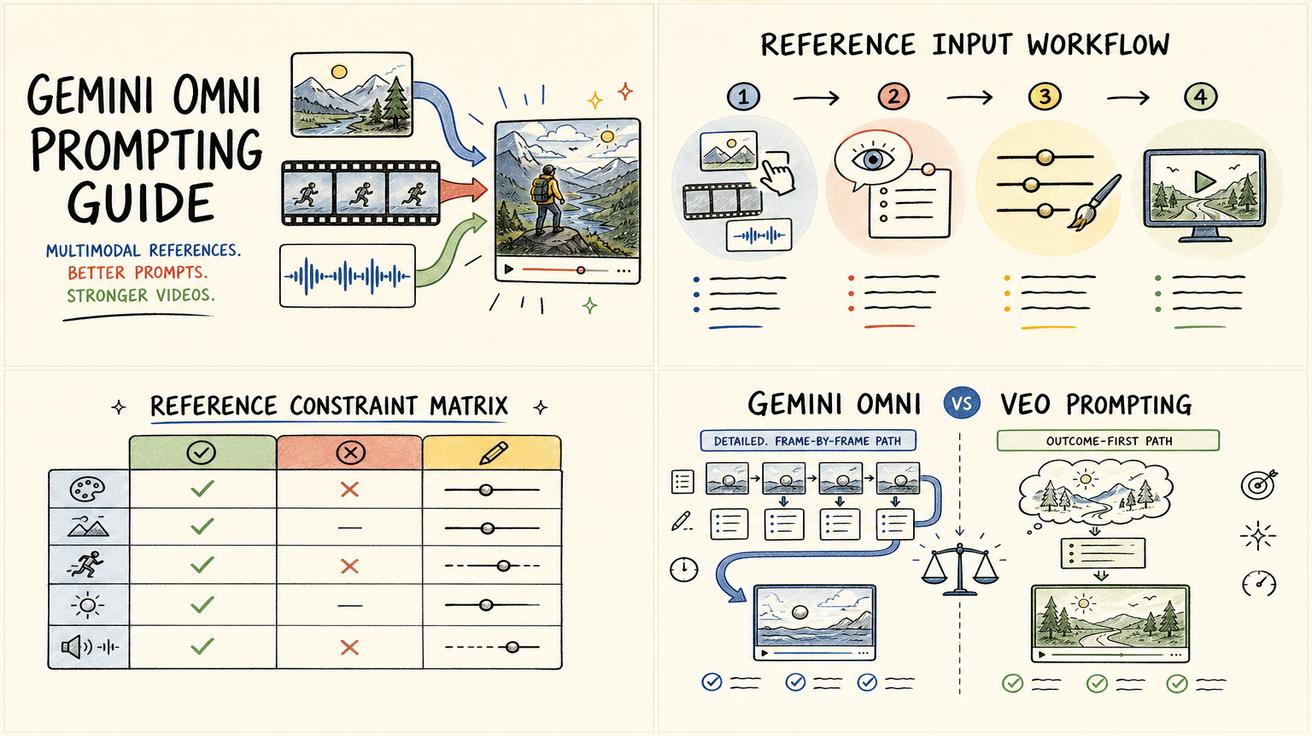
Gemini Omni vs Veo Prompting: Why Omni Prompts Can Be Less Prescriptive
Learn why Gemini Omni prompting can be less prescriptive than Veo prompting, with practical prompt examples, workflow tips, and safe wording about the Veo transition.
Read article